

Tuber zambonelliae Ant. Rodr. & Morte
Persoonia 46: 517 (2021)
Etymology:
Named after Alessandra Zambonelli, from the University of Bologna, mycologist and specialist in hypogeous fungi and mycorrhizae, for her outstanding contribution to the knowledge of Tuber spp.
Macroscopic characters:
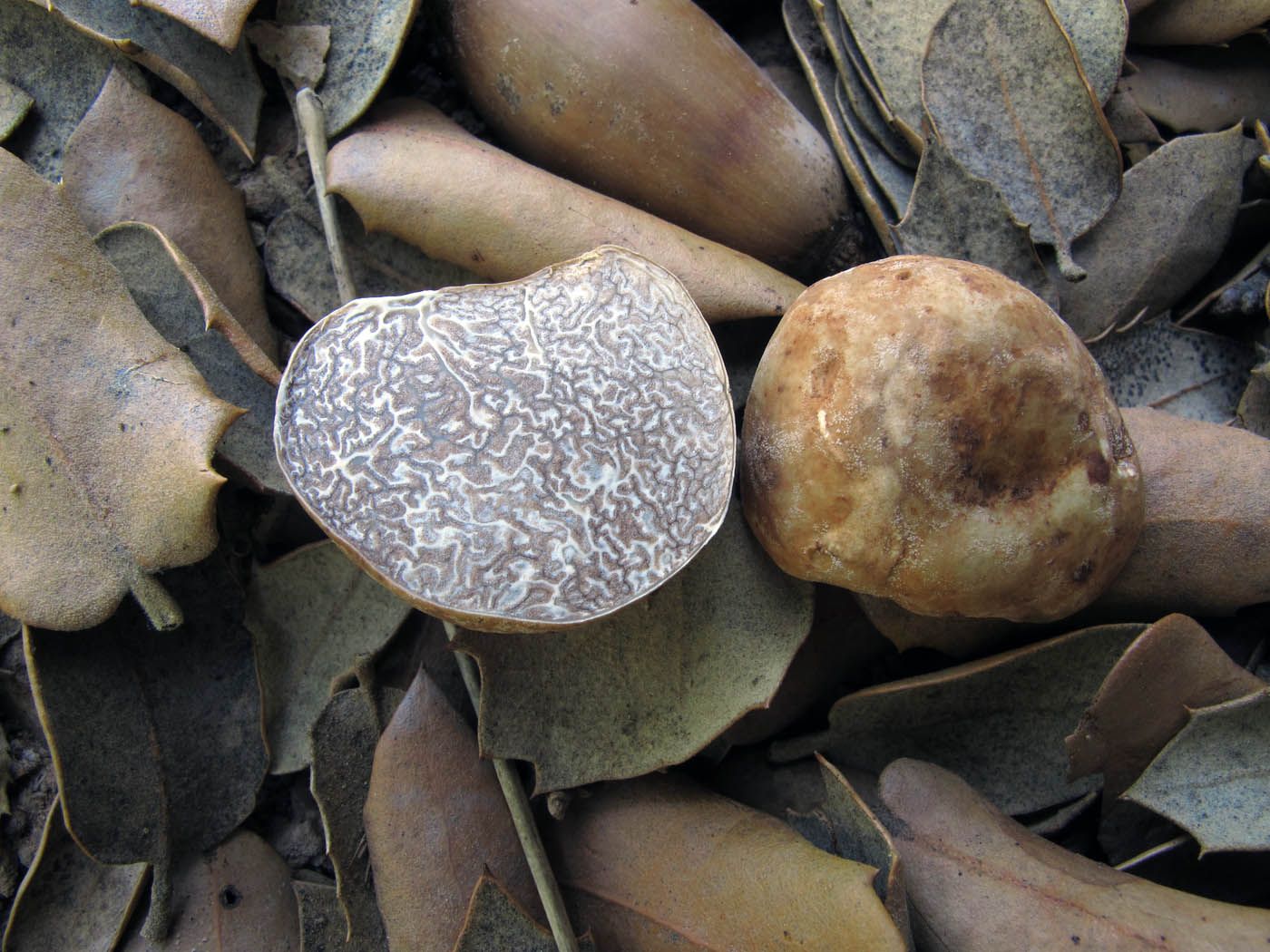
Ascomata: hypogeous, 0.5–2 cm diam., subglobose, pale brown, smooth, minutely pruinose.
Peridium: 100–200(–300) μm thick, composed of hyaline, agglutinated, interwoven hyphae (intricate texture).
Gleba: firm, solid, whitish at first, becoming pale to dark brown at maturity, marbled with numerous, branching, white and dark veins.
Odour: pleasant.
Habitat:
Tuber zambonelliae grows in Mediterranean Quercus ilex subsp. ballota forests, in limestone mountains of the south of the Iberian Peninsula, 1000–1300 m in altitude. The species occurs in spring and summer.
Notes:
Tuber zambonelliae is a pale brown truffle that clusters in the rufum clade, and is characterised by its smooth peridium, brown gleba marbled with white and dark veins and spiny-reticulate spores. Tuber zambonelliae resembles Tuber nitidum, but in addition to genetic differences, T. nitidum differs by having a basal cavity, peridium with cellular structure in the outermost layer and smaller spores with separate and shorter spines (Ceruti et al. 2003). Tuber requienii also resembles Tuber zambonelliae but it has a papillose peridium and lacking dark veins (Tulasne & Tulasne 1851).
Microscopic characters:
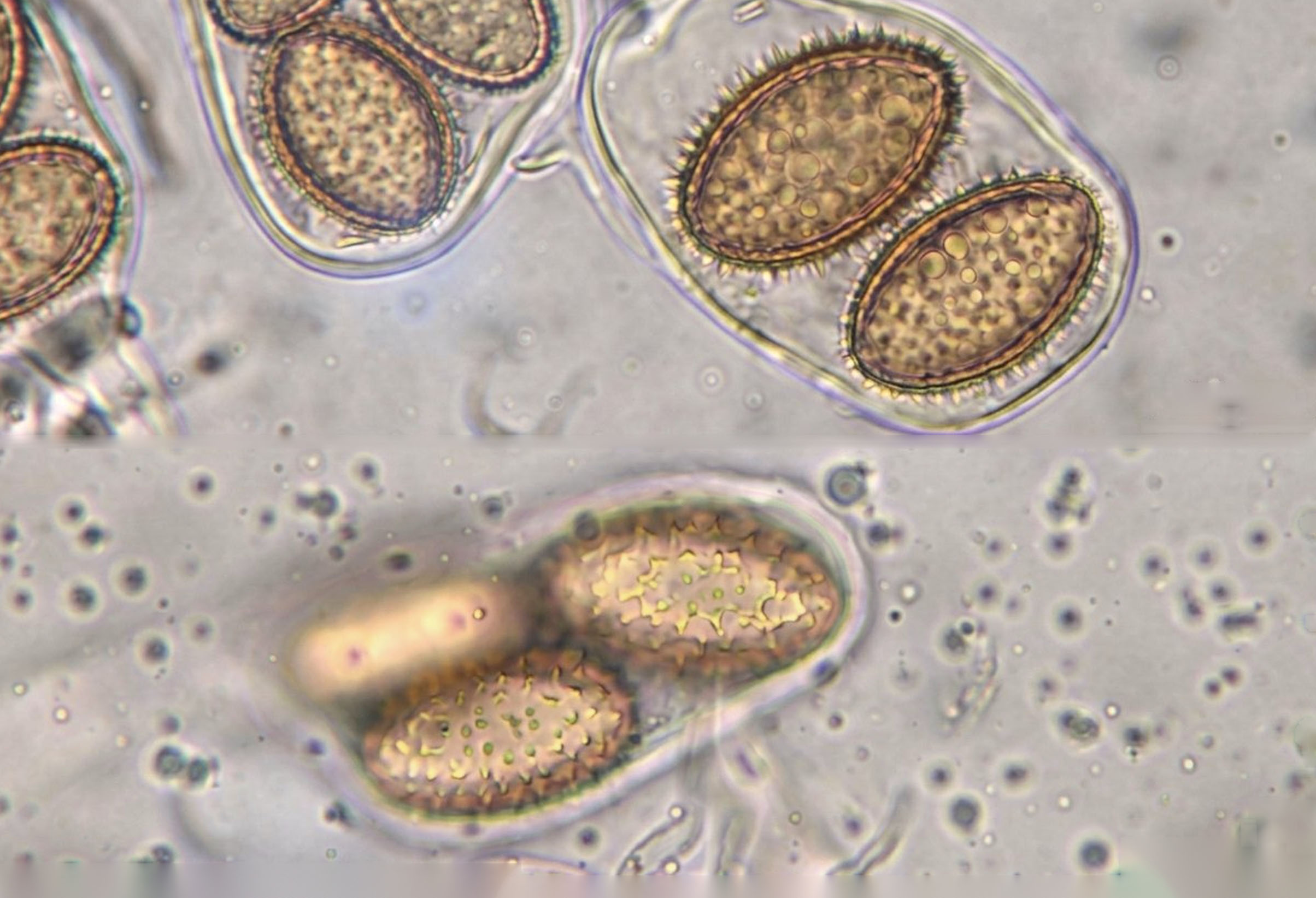
Asci: inamyloid, 60–70 × 40–50 μm excluding stalk, pyriform to clavate or subglobose, with a long or short stalk arising from a crozier, 10–40 μm long, walls 1–2 μm thick, 1–4(–5)-spored.
Ascospores: 22–45 × 16–26 μm, Q = 1.4–1.9, excluding ornamentation; at first hyaline, yellowish brown at maturity; ellipsoidal to ovoid, ornamented with short spines, 1–2 μm long, often connected by lower ridges, making the ornamentation an irregular and incomplete spiny reticulum.
Phylogenetic analysis:
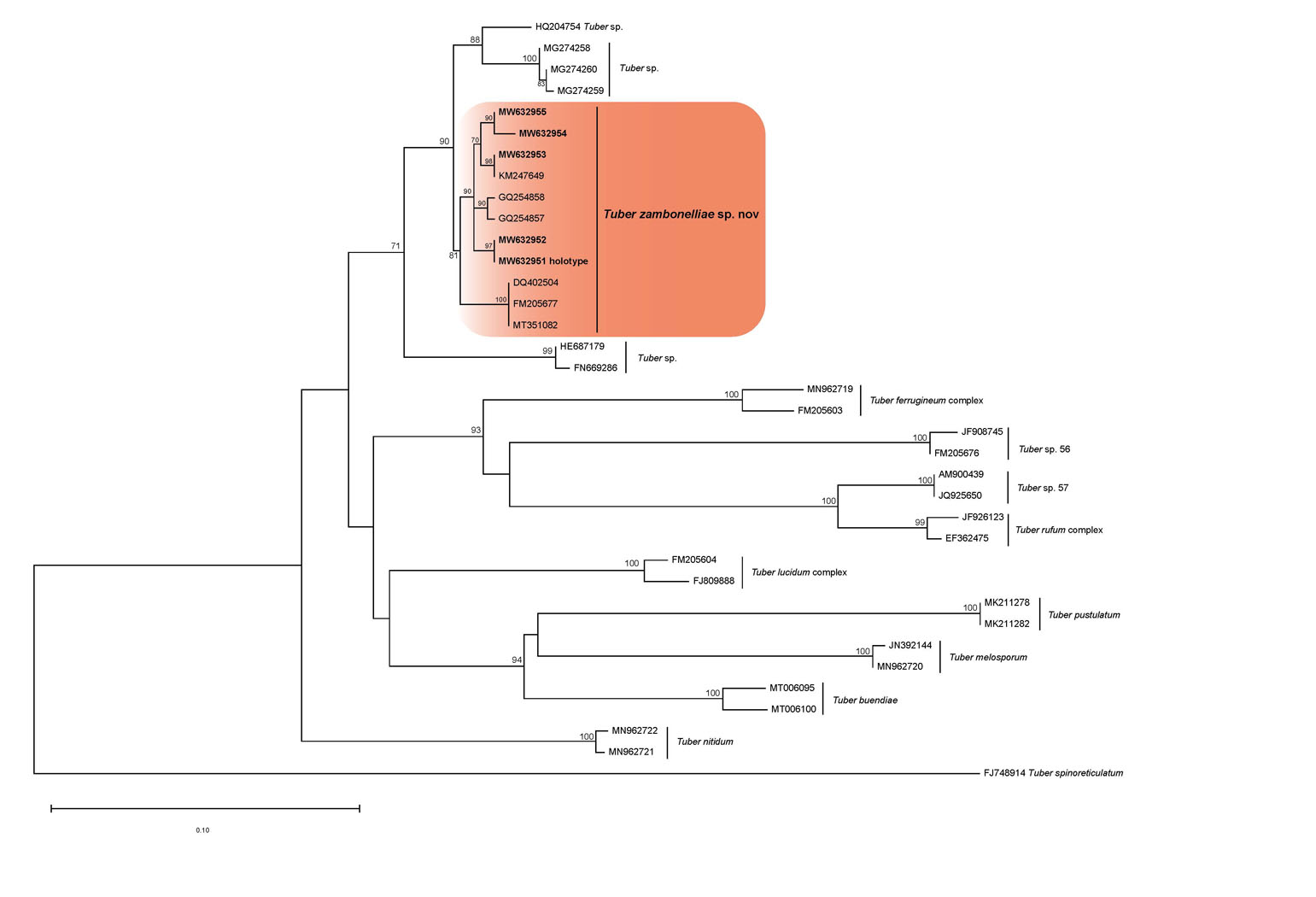
Maximum likelihood (ML) phylogenetic tree of the T. rufum clade inferred from ITS sequences, using RAxML-HPC v. 8 (Stamatakis 2014) on XSEDE in the CIPRES Science Gateway (Miller et al. 2010). GTR + G was selected as the model of evolution for the analysis. The sequences obtained in the present study are highlighted in bold and the novel species with a coloured box. Bootstrap support values (≥ 70 %) are indicated at the nodes. Tuber spinoreticulatum (GenBank FJ748914) was used as outgroup. The scale bar indicates the expected changes per site. Species hypotheses for undescribed species (Tuber sp. followed by numbers) follow the conventions of Bonito et al. (2010).
 |
Antonio Rodríguez trufamania@gmail.com antonio@trufamania.com ORCID iD: 0000-0002-0708-7773 |